






.webp)




.webp)





Free guide: recording consent.

Recording meetings has become a common practice in many workplaces. It's useful for keeping accurate records, capturing important details, and allowing participants to focus on the discussion rather than note-taking.
The best thing you can do is simply ask. That's it. Before you press record, ask if it's okay. Something as simple as:
"Is it okay if I record this meeting so I can keep accurate notes?"
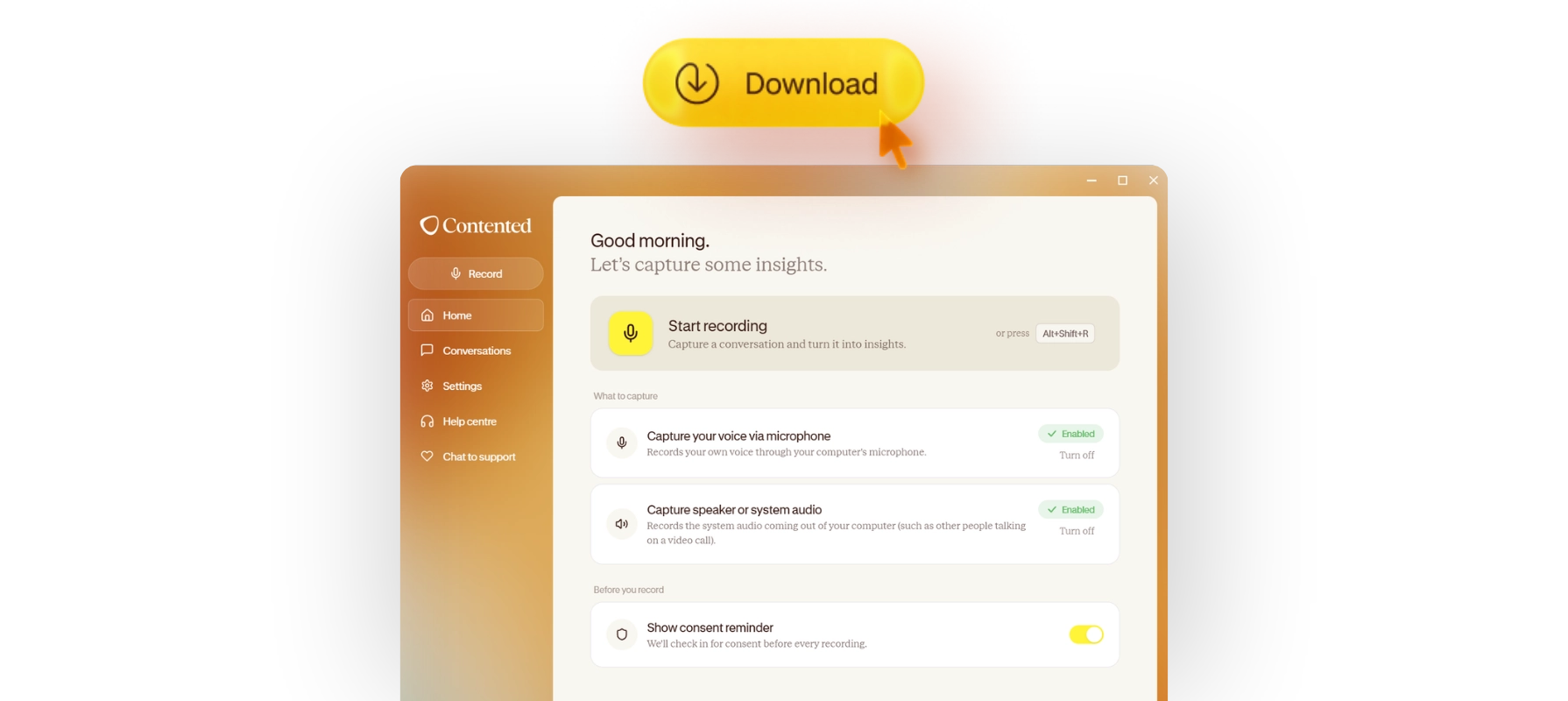
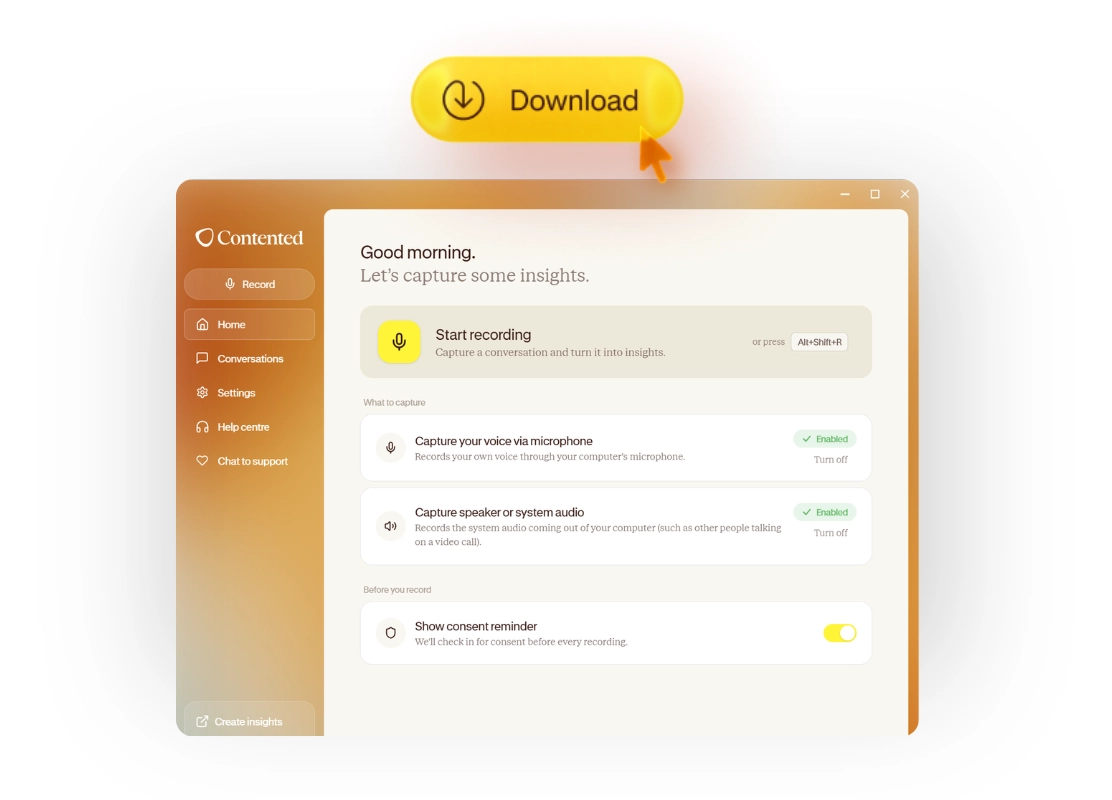
Most people will say yes - especially when you explain the benefit to them. And if they'd prefer not to be recorded? No problem. You can offer to take notes instead. Contented's built-in reminders will prompt you to ask for consent before each recording, so you'll never forget.
How to use this guide
- Start with Part 1 for 10 easy ways to ask for consent. Pick the approach that feels most natural to you.
- Grab templates from Part 2 if you want to set expectations in advance through calendar invites, email signatures, or contracts. This makes the live ask even easier - people already know what to expect.
- Check out Part 3 if you're building a formal recording policy for your organisation.
A note on privacy laws
This guide is designed to be internationally applicable. Privacy laws vary by jurisdiction - please check your local regulations (such as GDPR in Europe, CCPA in California, Privacy Act in Australia/New Zealand, PIPEDA in Canada, or other applicable laws in your region) to ensure your recording practices comply with local requirements.