






.webp)




.webp)



What is an empathy map template?
An empathy map is the classic UX research framework for synthesising a single conversation. Usually built from interviews, the table features four columns: say, do, think, and feel, arranged side by side. Contented populates all four columns directly from the recording. Quotes are verbatim, behaviours are observed, and inferences for 'think' and 'feel' are grounded in what was said.
.svg)
How to use an empathy map template
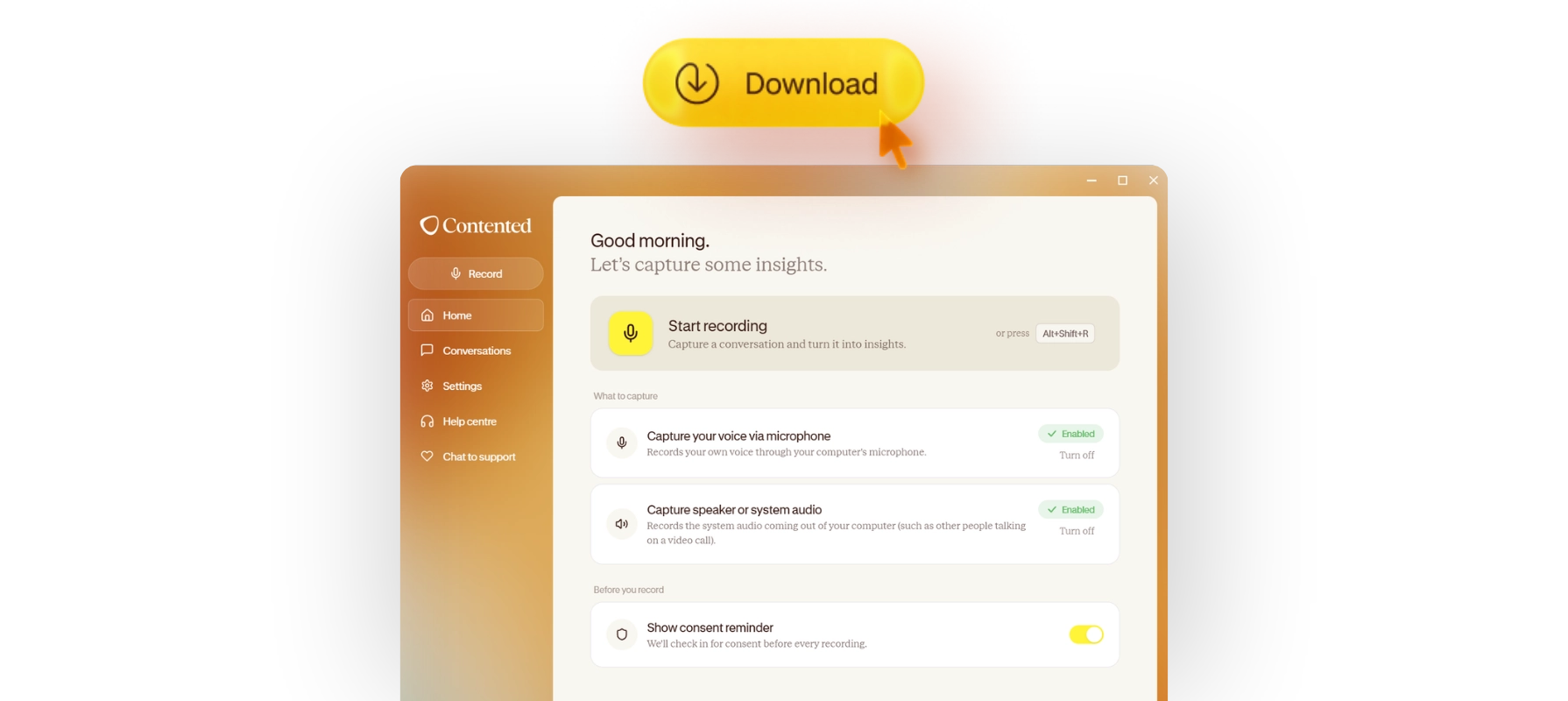
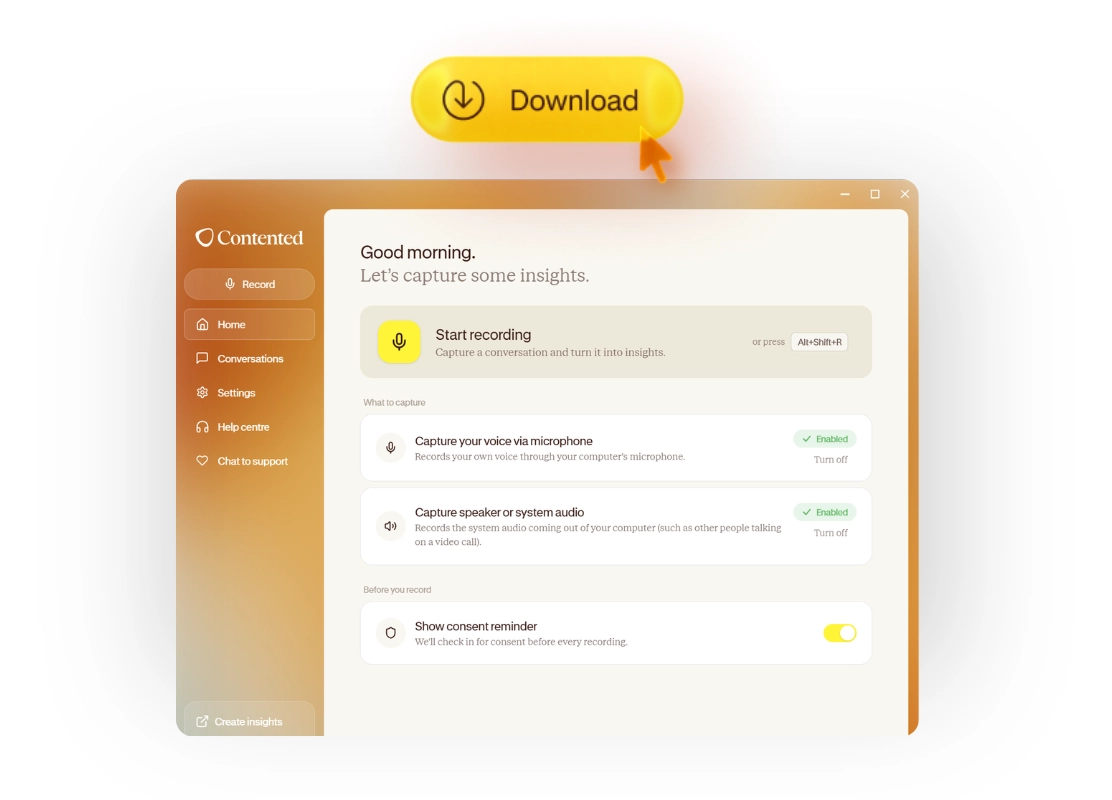
Record your interview or meeting in the Contented app, pick the empathy map template, and download a structured four-column table within minutes.
1. Record your conversation
Capture the conversation in the Contented app. It's great for user research interviews, customer discovery, candidate interviews, performance reviews, and any session where you need a rounded view of one person or user.
2. Select the empathy map template
Choose empathy map from your Contented workspace. Contented works through the recording and populates the four columns (say, do, think, feel), drawing direct quotes for 'say', observed behaviours for 'do', and grounded inferences for 'think' and 'feel', all sourced from the conversation.
3. Review and export
Download as PDF or Word. Use it for research write-ups, hiring panels, design workshops, or as input to a persona or journey map.
Who uses an empathy map template?
Anyone who needs a structured, multi-dimensional view of a person from a single conversation.
A few examples:
- UX and product researchers running user interviews.
- Service designers and design strategists synthesising customer or stakeholder conversations.
- Recruiters and hiring managers building a rounded picture of a candidate.
- People and HR leads documenting performance reviews, exit interviews, or development conversations.
- Consultants and coaches working with clients diagnostically.
What's in an empathy map template?
- A four-column table: say, do, think, feel.
- Say: verbatim quotes from the recording, chosen because they capture how the person talks about what matters to them.
- Do: observed behaviours and actions described in the conversation, including what the person has done, led, managed, decided, or chosen.
- Think: inferences about beliefs, values, and points of view, drawn from what was said and how it was said.
- Feel: inferences about emotional states and attitudes, grounded in tone and word choice from the recording.
- Export-ready as PDF or Word, suitable for the research file, candidate record, or design workshop input.
FAQs
Can we use our own document templates?
Yes, on team plans. We build custom templates that match your organisation's existing formats, branding and terminology. Every document Contented produces is then consistent with what your team already uses, regardless of who created it.
Does Contented work with different accents and languages?
Yes. Contented is built to handle diverse accents, multiple speakers, background noise, and technical or industry-specific vocabulary. Templated outputs can be generated in any language, making it practical for multilingual teams and organisations operating across different regions.
Is my data used to train AI?
No. Your conversations are processed transiently and permanently deleted from your device - never stored or used to train AI models. Our AI sub-processors operate under legally binding zero data retention agreements. We never store your outputs in our applications.