






.webp)




.webp)




.svg)
What is a motivation map template?
A motivation map - also known as Jobs to be done - pulls out what's driving someone in a conversation and puts into an easily scanned canvas. It captures the struggles they're voicing, the needs sitting underneath, and the functional and emotional aspects shaping how they'd like things to change. It's a staple in product discovery, UX research, and coaching, because it moves past surface-level feedback and gets to the why.
It's one of those frameworks that looks simple on paper but is fiddly to produce by hand. You finish a research call or a one-to-one and you've got pages of notes, but teasing out the emotional undertone from the functional ask takes ages. By the time you do it for three interviews in a row, you've lost half the nuance.

How to use a motivation map template
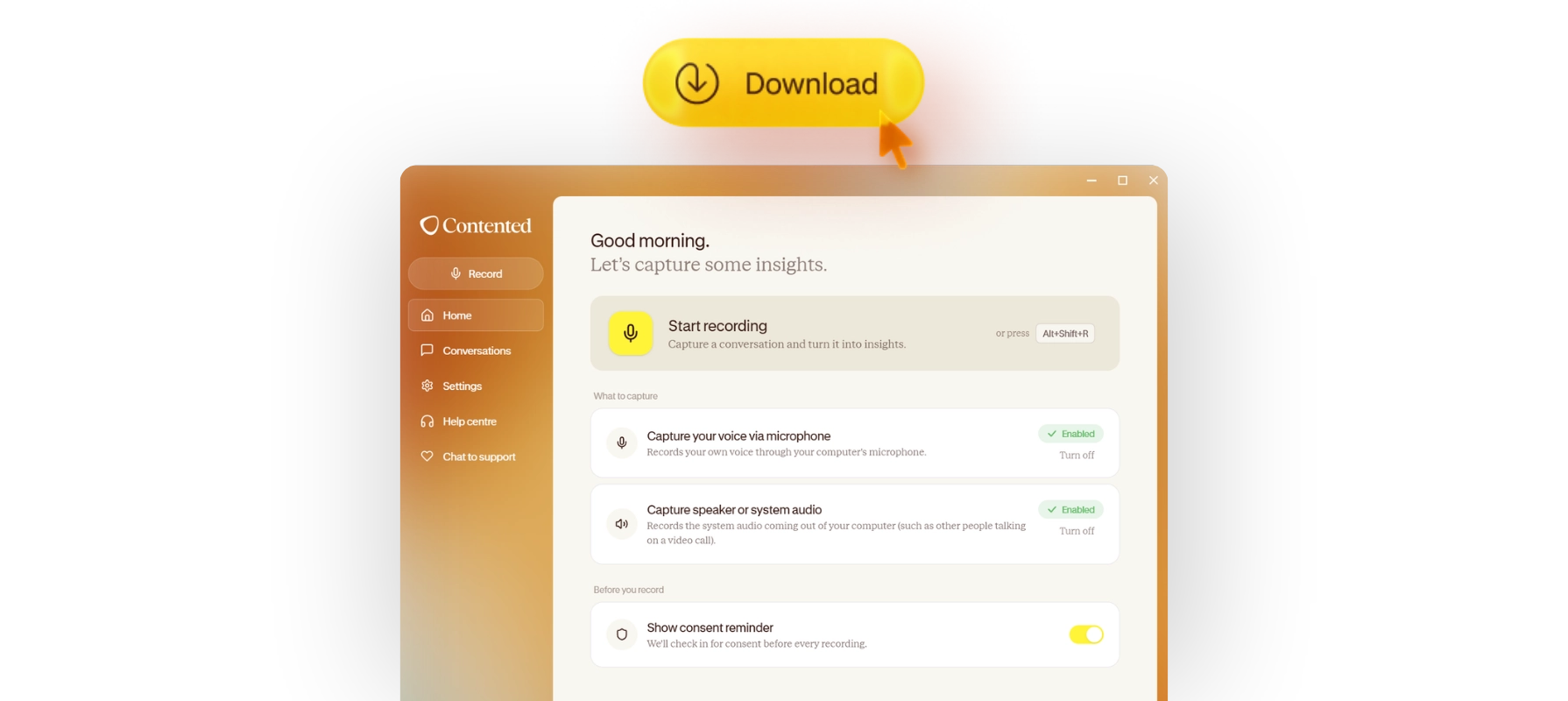
Record your meeting in the Contented app, pick the motivation map template, and download a structured table within minutes.
1. Record your conversation
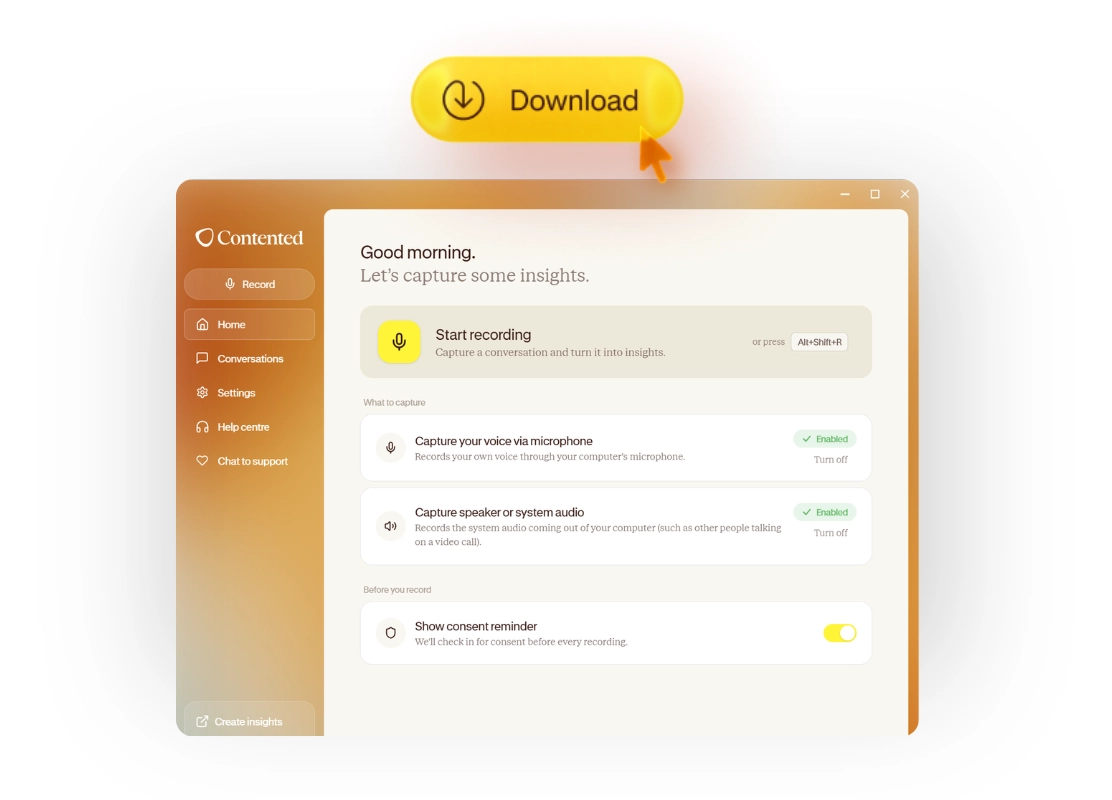
Capture your meeting, one-to-one, performance review, or discovery call in the Contented app. It handles long, winding conversations where motivations surface gradually.
2. Select the motivation map template
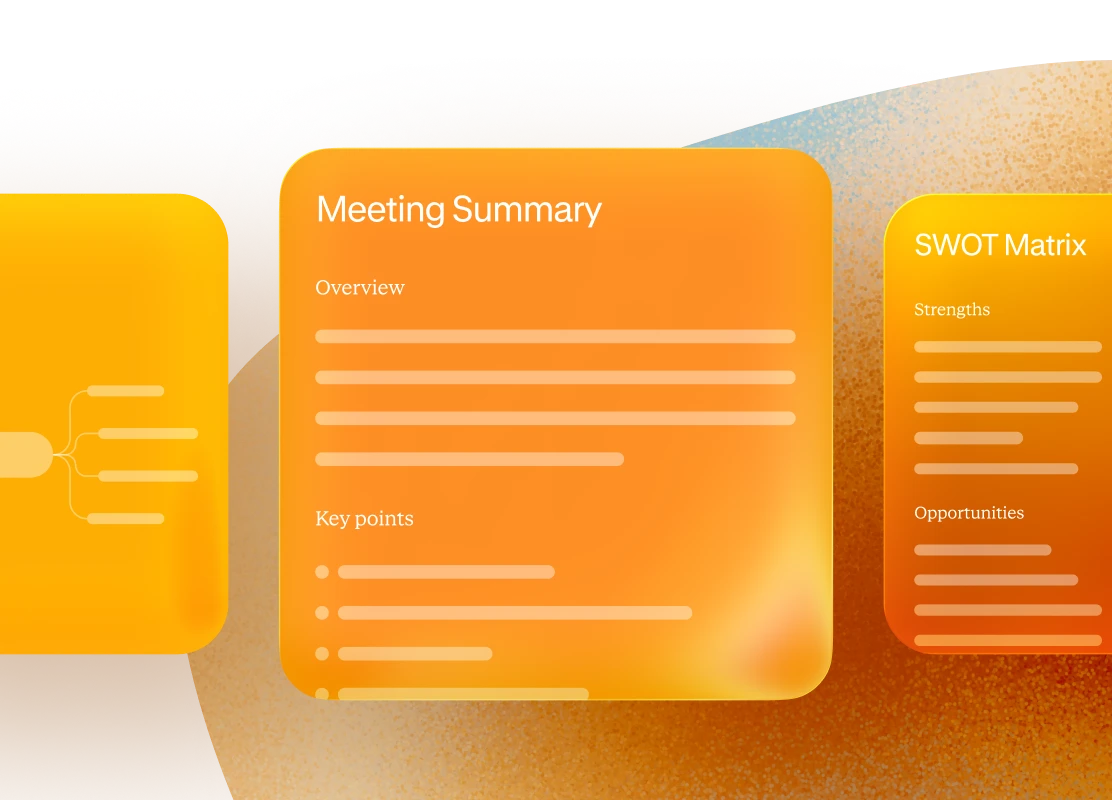
In your Contented workspace, choose motivation map from the Human-centred insights module. Contented will identify each distinct motivation, group the functional actions supporting it, and separate the personal and social emotional drivers into a table.
3. Review and export
Download the table as a CSV, PDF or Word document within minutes of the conversation wrapping up.
Who uses a motivation map template?
Anyone who needs to understand what's going on beneath what someone said.
A few examples:
- Product managers running user research interviews who need to move past surface-level feature requests and understand the emotional weight behind them.
- HR teams conducting performance reviews or interviews, where the real signal is often in what people don't quite say out loud.
- Marketing teams building personas from customer conversations, who need functional Jobs-to-be-done alongside the emotional motivations that drive decisions.
- Founders doing discovery calls with early customers, where mapping struggles and needs early shapes product direction.
- Coaches and therapists working with clients on goal-setting, where separating the functional from the emotional helps reveal patterns.
- Team leads running retros or one-to-ones who want to understand what's motivating or blocking someone.
What's in a motivation map template?
Based on a set framework for understanding tendencies and what drives behaviours, the motivation map is a structured canvas divided into motivation, functional aspects and emotional aspects (personal and social).
- Each motivation is captured as a clear statement, pulled from the language the participant actually used.
- Functional aspects cover the practical steps, workflows, or outcomes they're working towards for each motivation.
- Emotional aspects outline both the personal (what it means for them individually) and social (how it affects their relationships, team, or standing) motivators.
- Export-ready as CSV, PDF or Word.
FAQs
Can we use our own document templates?
Yes, on team plans. We build custom templates that match your organisation's existing formats, branding and terminology. Every document Contented produces is then consistent with what your team already uses, regardless of who created it.
How do I set up Contented?
Create an account at contentedai.com or join your team's existing workspace. Download the Contented mobile app on your phone and the app for Windows on your computer. Log in with those same details. You’ll use the apps to record your meetings and conversations, and the workspace to produce polished documents and insights.
Is there a free trial?
Yes. Every new account starts with a 7-day free trial, no credit card required. You'll get full access to record conversations, generate documents, and explore the templates. If you'd like to keep going after the trial, just add a payment method and pick the plan that fits.