






.webp)




.webp)



What is a user stories (table format) template?
When you're building a product, a website, an app, or really any tool that other people will use, it's easy to jump straight into what to build without properly thinking through who it's for and why they need it. User stories are a way of slowing that down.
A user story is a short, plain-language description of something a real person needs, written from their point of view. It follows a simple structure: who they are, what they want, and what they're hoping to get out of it. "I want product images to display at full width on mobile, so that I can properly see what I'm buying."
The user stories table template acts as a shared reference point. It keeps the focus on real people and real needs, rather than building features for the sake of features.

How to use a user stories template
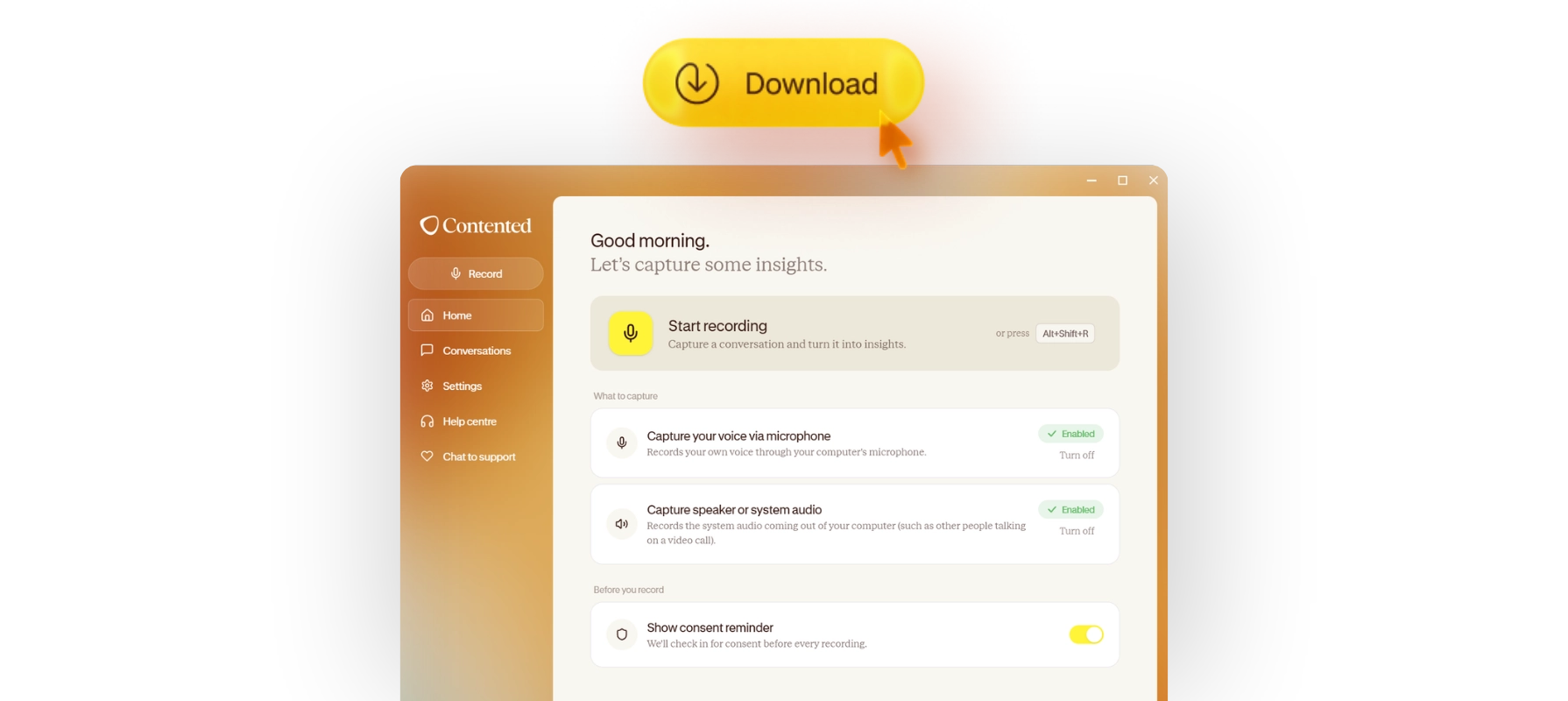
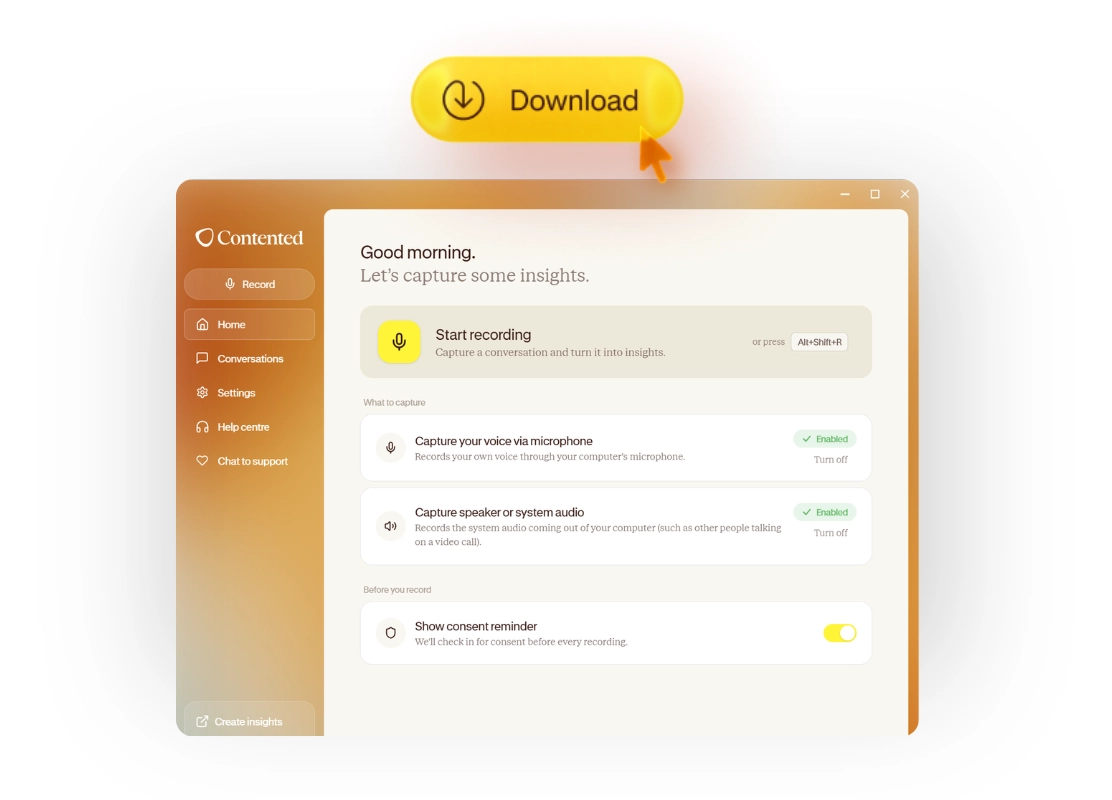
Record your meeting in the Contented app, pick the user stories template, and download a structured table within minutes.
1. Record your conversation
Capture your workshop, discovery call, or planning session in the Contented app. It works for sprint planning, product kick-offs, stakeholder interviews, or any session where user needs are being mapped out.
2. Select the user stories template
Choose user stories from your Contented workspace. Contented will identify each story raised in the conversation, assign the correct user role, and pull out the acceptance criteria based on what was said.
3. Review and export
Download as a CSV, PDF or Word document within minutes of the session wrapping up.
Who uses a user stories template?
Anyone building something for someone else.
A few examples:
- Product managers running discovery workshops with stakeholders, where requirements come out in conversation rather than a formal brief.
- Marketing and e-commerce teams planning product launches, where page features, pricing logic, and customer journeys all need capturing as actionable stories.
- Agile development teams in sprint planning, where stories need to be clearly defined before work can begin.
- UX researchers turning interview sessions into structured requirements for engineers to work from.
- Agencies running client workshops, where the client's vision needs translating into a format the build team can receive and act on.
- Consultants facilitating product strategy sessions, where the output needs to be more than a slide deck.
What's in a user stories table?
The table is structured around five columns: story title, user role, I want, so that, and acceptance criteria.
- Each story is clearly titled and grouped by theme, so related requirements sit together.
- User roles are assigned per story, whether that's a customer, a product manager, a commercial lead, or any other stakeholder who came up in the conversation.
- The "I want / so that" format keeps every story anchored to a user need and an outcome, not just a feature request.
- Acceptance criteria are specific and testable, pulled from the detail in the discussion, including timelines, conditions, and edge cases where they were mentioned.
- Export-ready as CSV, PDF, or Word, so it can go straight into Jira, Linear, or wherever your team manages their backlog.
FAQs
Is my data used to train AI?
No. Your conversations are processed transiently and permanently deleted from your device - never stored or used to train AI models. Our AI sub-processors operate under legally binding zero data retention agreements. We never store your outputs in our applications.
Does Contented work with different accents and languages?
Yes. Contented is built to handle diverse accents, multiple speakers, background noise, and technical or industry-specific vocabulary. Templated outputs can be generated in any language, making it practical for multilingual teams and organisations operating across different regions.
What templates are available?
There are 50+ templates across three modules: Meeting insights (meeting minutes, action tables, decision logs, SWOT analyses, risk register), Human-centred (empathy maps, user stories, jobs-to-be-done frameworks), and Marketing (thought leadership articles, case studies, social posts). There are also industry-specific templates for financial services, construction, HR, legal and more. On team plans we can build custom templates formatted to match your firm's existing documents.