








.webp)


ChatGPT vs Contented: Which to choose for which job?

One's for ideas, one's for accuracy.
ChatGPT and Contented do different jobs. Knowing which one to reach for - and when to use both - will help you create a smooth workflow.
When ChatGPT became mainstream, a lot of teams started using it for everything - meeting summaries, client reports, strategy documents. It works well enough, but outputs often feel generic, names are wrong, and the quality is unpredictable.
The problem isn't necessarily ChatGPT. The problem is using a general-purpose AI tool for a job that needs something more specific. We built Contented for that gap. If you're new to the product, what Contented is and how it works is a good place to start.
What is ChatGPT good at?
ChatGPT has access to the whole internet, and draws on an enormous pool of external knowledge. When you don't know where to start, when you need ideas fast, or when you want to understand something you've never encountered before, it's great for that.
Specifically, ChatGPT works well for:
- Generating ideas before a meeting or workshop.
- Answering general questions ("How do other HR teams approach candidate screening?").
- Drafting frameworks or agendas before a conversation happens.
- Acting as a thinking partner when you're stuck.
OpenAI has invested heavily in enterprise capabilities. ChatGPT Enterprise offers unlimited higher-speed GPT-4 access, long context windows, advanced data analysis, and enterprise-grade security with ISO/IEC 27001:2022 certification.
We're not here to dismiss it.
What are the limitations of ChatGPT?
ChatGPT is fine-tuned for dialogue with prompts. That means it's designed to respond to your queries, fill in gaps, and generate plausible, well-structured text. It gives you a response based on what it anticipates you need. When you ask it to summarise a conversation, it's making educated guesses based on what you feed it, and then it it fills the gaps with generalities and assumptions. The output often reads like it could belong to any company, rather than preserving your voice.
Getting useful outputs from ChatGPT depends almost entirely on how well you write your instructions. And a good prompt isn't a sentence or two. Effective prompts are realistically hundreds of words long, packed with context, constraints, examples, and specific instructions. Writing them well is a skill. Even then, you're usually looking at several rounds of back and forth before you get something close to what you actually needed. Even if you nail the prompt, consistency becomes an issue - feed the same prompt in tomorrow and you'll get a different output. For teams without someone who knows how to prompt well, that process can eat more time than it saves.
How does Contented work?
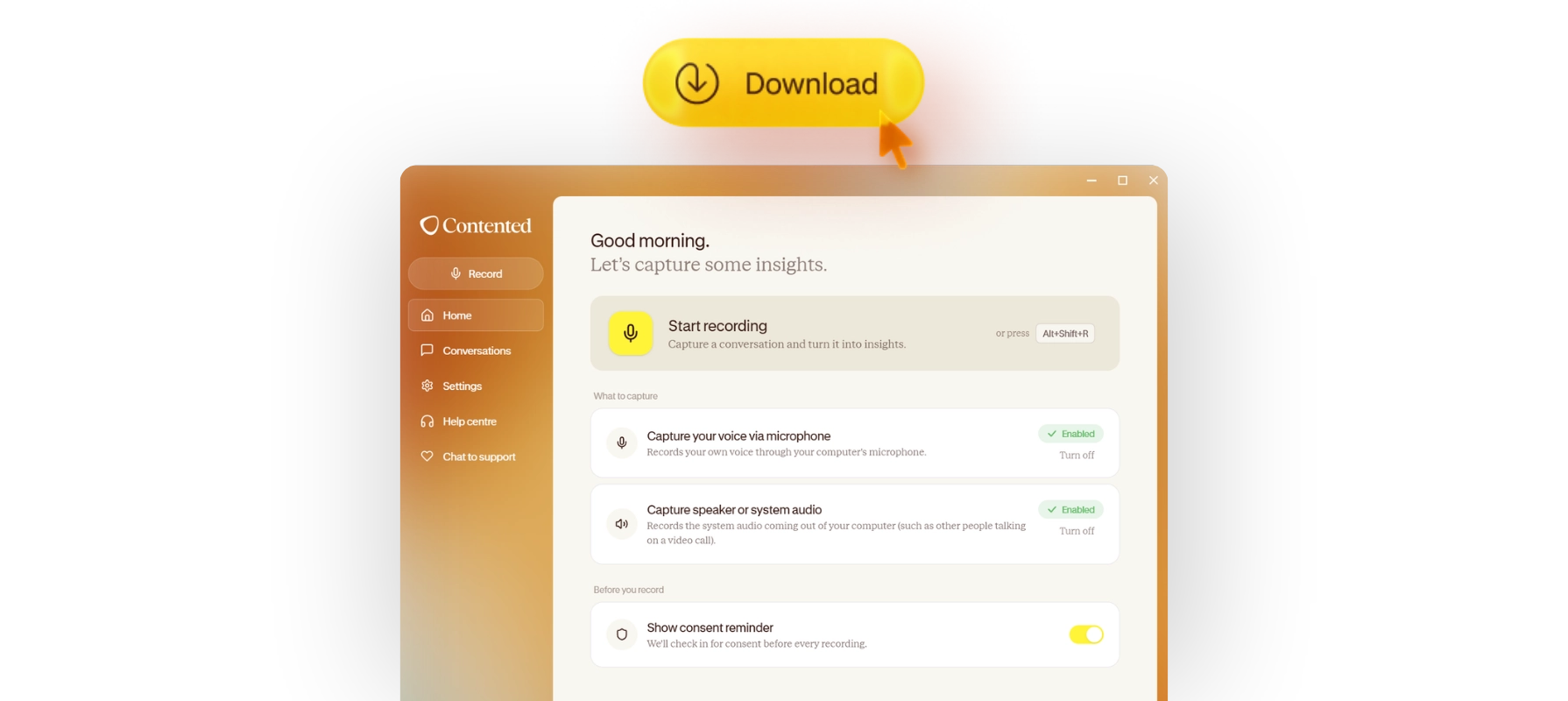
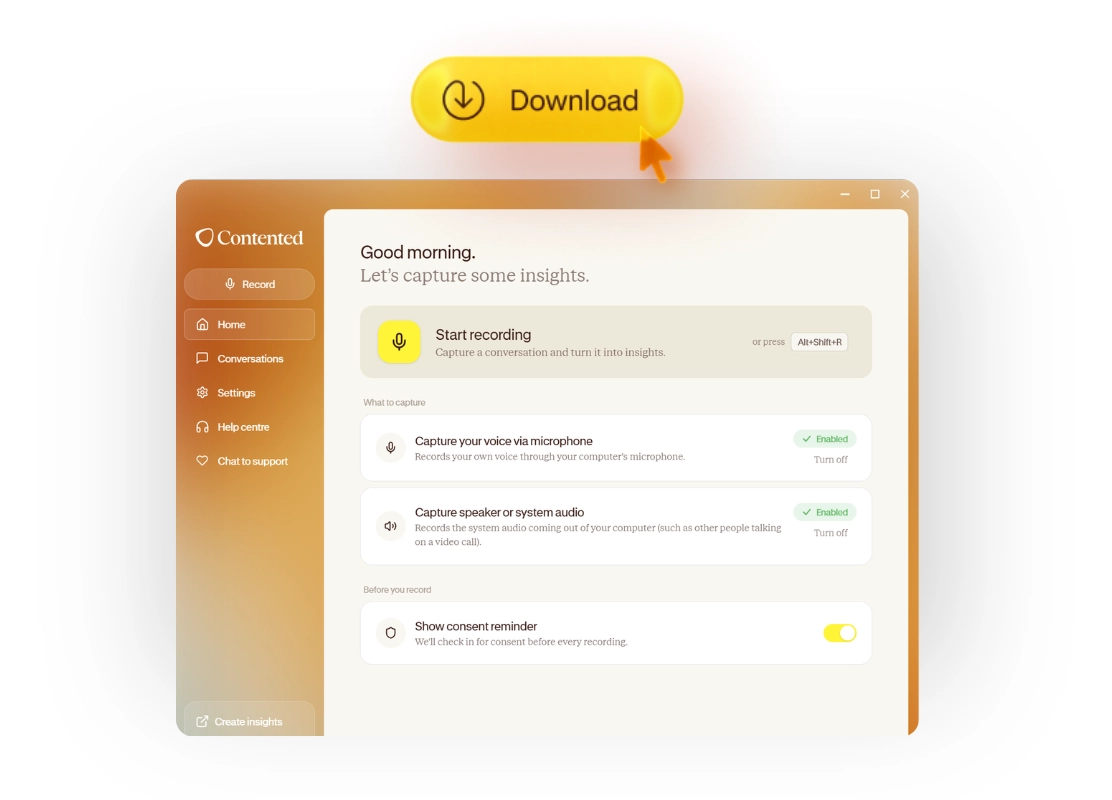
Contented records your conversation, and only produces documents and insights using what was said in that specific meeting. It's your words, shaped into something useful, with no outside noise or generic fillers.
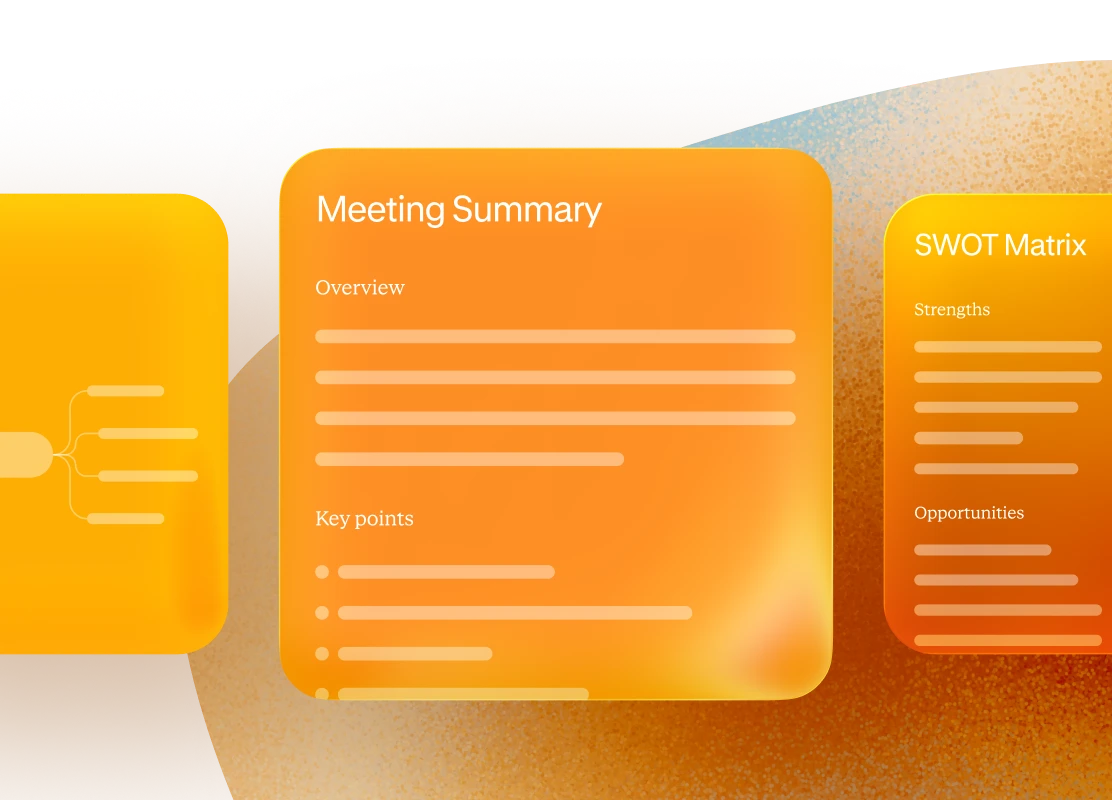
The core workflow is straightforward: record any conversation using the Contented app on mobile or computer, then apply one of 50+ expert-designed templates to turn that recording into a business-ready document, chart, or content, then export it as a Word, PDF, CSV or PNG file. The output reflects exactly what was said, with the right names, context, and structure for the document type you need.
Contented is your workspace, where you actively create share-ready content. ChatGPT is more like a reference tool you consult along the way.
Another useful way to put it: ChatGPT is good for ideas. Contented is good for transforming your actual words into useful things.
How is what Contented produces different from ChatGPT?
ChatGPT generates responses by drawing on everything it was trained on: vast amounts of internet data, research, documents, and general knowledge. When you ask it a question, it reaches into that entire pool to construct an answer. But when you're documenting a specific client conversation, that breadth works against you. It will fill in gaps, add context it thinks is relevant, and produce something that sounds plausible but may not reflect what actually was said.
Contented works differently. When you record a conversation and apply a template, Contented only draws from that specific conversation. It does not add information from outside sources. It doesn't pull in context from other conversations or supplement your meeting with things it thinks should have been said. The output is built entirely from that specific recording. If a client said something specific about their budget, their concerns, or their decision timeline, that's what appears in your document. The document is a direct product of that conversation.
For teams in regulated industries, this distinction is important. An audit trail that includes AI-generated assumptions about what was probably said is not an audit trail. Contented gives you compliance-ready records.

ChatGPT vs Contented: side-by-side comparison
Which one should I use?
Reach for ChatGPT when:
- You need ideas and you're starting from scratch.
- You want to understand a topic you don't know well.
- You're building an agenda or framework before a conversation happens.
- You need a general answer to a general question.
- You're preparing for a workshop or brainstorming session.
Reach for Contented when:
- You've had the conversation and need to turn it into something formatted and useful.
- Accuracy matters: names, decisions, and specific details need to be right.
- You want a consistent, repeatable output every time.
- You don't have the time or skills to write prompts and go back and forth.
- You want multiple outputs from the same recording (summary, action list, risk register).
- You need something that reflects your voice, not the internet's.
- You're in financial services or another regulated industry where documentation needs to be audit-ready.
A realistic workflow might look like this:
- Use ChatGPT to brainstorm what to cover in an upcoming workshop or client meeting.
- Record that meeting using Contented.
- Use Contented to turn the recording into an action list, a board summary, a risk register, or a LinkedIn article.
If you are ready to see what Contented can do, start a free seven-day trial or book a demo with out team. No minimum term, no lock-in.