

















In an emergency, conversations are data you need to trust.

Siena Brody-Heine is the Product Manager at Contented.
In an emergency, people act on information they trust. Conversations and data are a critical part of that trust, especially in the age of AI.
I started my career in disaster risk reduction and climate science. For my master's at the University of Canterbury, I worked with GNS Science, now Earth Sciences New Zealand, to model atmospheric gas dispersion across the Auckland volcanic field. I also worked with Fire and Emergency New Zealand on how changes in wind direction and velocity might affect wildfire modelling, then did hazard resilience programming in rural British Columbia.
Moving from that into product management at an AI company seems a bit disjointed. But there was a thread running through all of it: data. How do we get better data to make better decisions? Whether it’s maps, figures or voice, data is good if it's high quality.
We don’t often think of conversations as data, but they are. And in emergency management, how we capture, structure and use that data is enormously important. I’d say it’s as important as the science we do, because it’s how communities understand the decisions that have been made and the reasoning behind them.
In an emergency, people need to trust the source of the information they're getting, how it’s been processed, how it’s been displayed and how it’s been shared. That trust is earned over time, across multiple events. It influences how communities respond, and how charities and regional and national services work together. Inaccurate and confusing messaging can be a significant barrier to it.
AI adds a new, complex layer. People now need to trust not only what’s being said, but where the information is coming from and what data is being used. Emergency data contains highly sensitive information, like health needs, details about vulnerable people and addresses. Where is it stored? Is it being used to train models? There are obligations under the Privacy Act 2020 and to respect Māori data sovereignty.
At Contented, we work with over 400 organisations, and we treat voice data with the same seriousness as bank data.
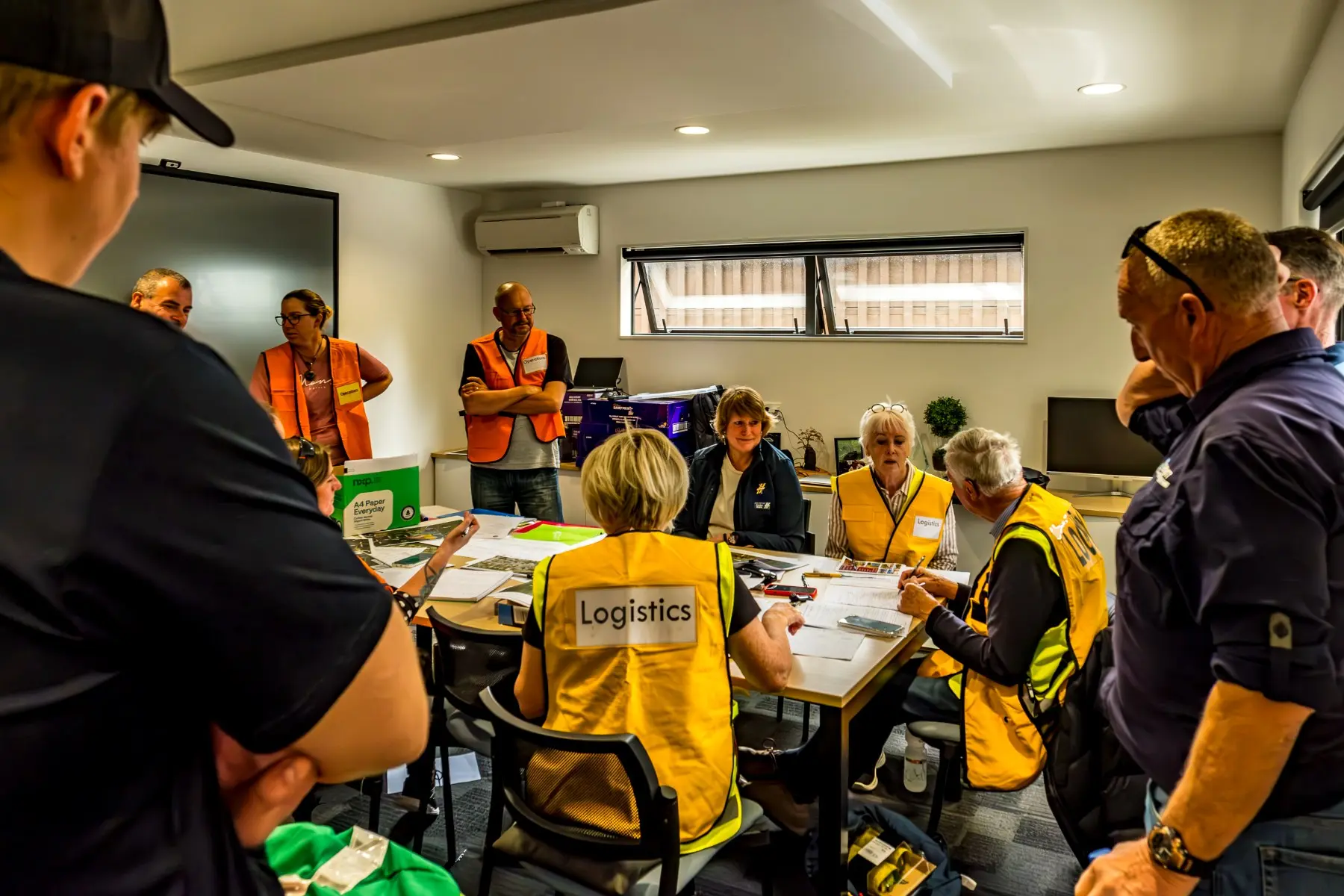
Beyond trust, there are other core tenets to consider.
The first is simplicity. Emergency management practitioners include scientists, police, military, and people working in government and nonprofits. In a crisis, tools need to be simple and not add to cognitive overload. You shouldn’t have to think about how to use the software.
The second is mobility. During an unfolding event, people are moving around. You’re not sitting at a desk. Imagine only having your phone, but needing to create public documentation. That’s why Contented is mobile-first, with an app that works online or offline.
The third, and I’d argue the most important, is accuracy and consistency. In an emergency, we don’t have time to check everything, and with the right tools we shouldn’t have to. We need to trust that a tool isn't hallucinating and is making correct assumptions. Action items from an emergency management meeting are critical decisions. Five people using five different AI tools, prompting five different ways, will get five totally different responses. Part of emergency management is creating clarity in chaos, and your tools need to support that.
Hurunui District Council is a strong example. They had been using Contented for quite a while to improve efficiency across governance. During one extreme weather event, with downed trees, road closures and power failures, Contented was already second nature. Their emergency controller recorded meetings on her phone and produced situation reports in a standardised format for regional and national offices in under 10 minutes, something she said would often take her hours. Afterwards, they could review the captured meetings and create standard processes from what they had done.
New Zealand is one of the most hazard-exposed countries in the world and a recognised leader in disaster risk reduction. To keep that reputation, we need to think carefully about how AI can be applied.
We should use it with the same care and deliberateness that emergency management demands of everything else.
Start a free trial with Contented and see how your team’s conversations can become documents you can act on.